
簡介
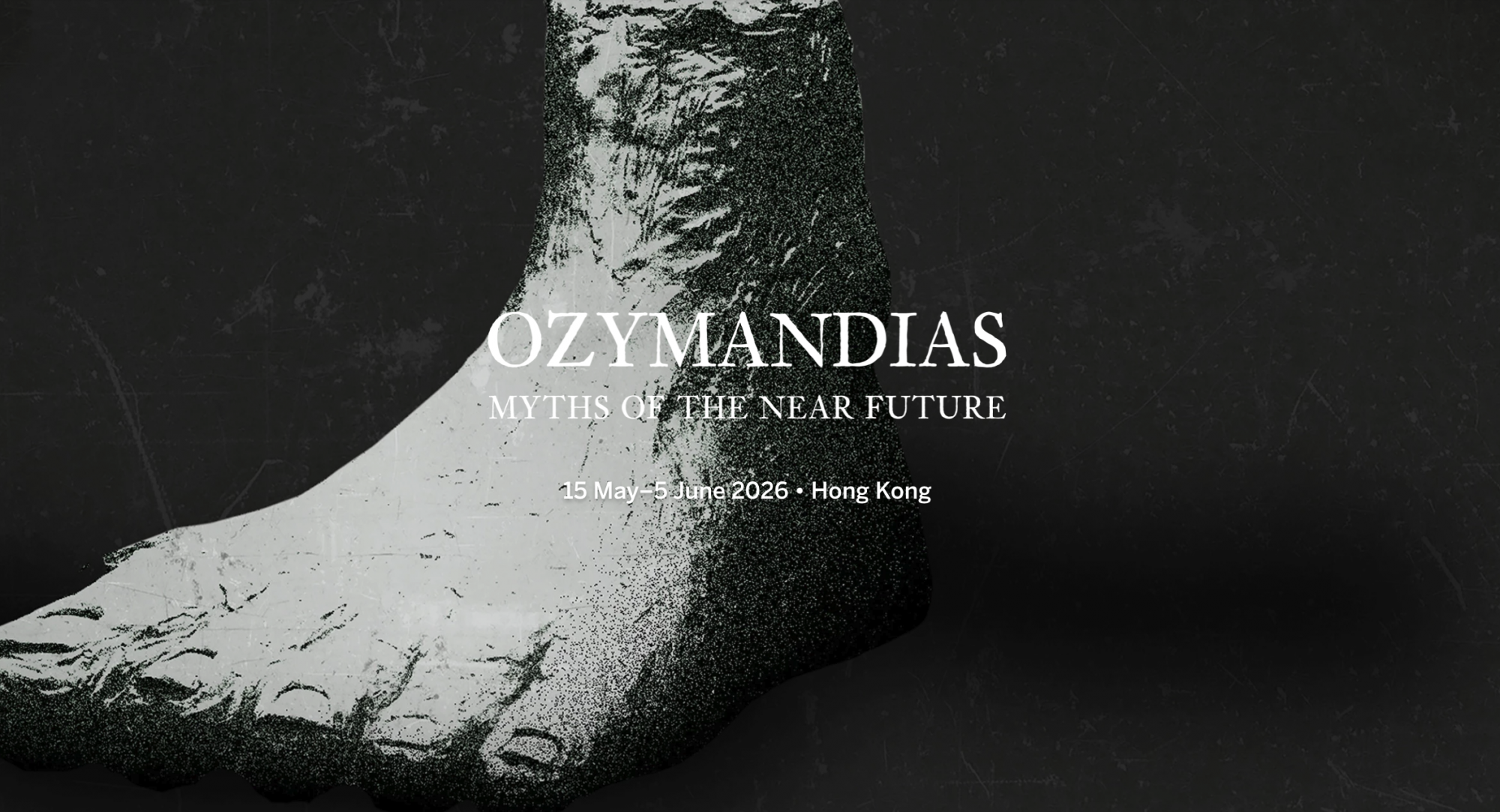
Ozymandias: Myths of the Near Future is an invitation into an encounter arising from the collision between Percy Bysshe Shelley's vision of fallen empires and J. G. Ballard's worlds of psychic and environmental collapse. Bridging fashion, literature, music, ancient sculpture and modern and contemporary art, the exhibition imagines a near future in which the present is already becoming a poetic archaeology where myths are formed through decay, fragmentation, and survival.
Drawing inspiration from Shelley's vision of ruin, fragility and the beauty of imperfection as premised in his 1818 sonnet Ozymandias, and Ballard's proposition that dystopian catastrophe does not end culture, but remakes it, Ozymandias: Myths of the Near Future offers a Mad Max-esque world where meaning is forged in the wake of collapse. Here, beauty is no longer pristine; it is weathered, patinated, and scarred. What endures is not intact, but altered.
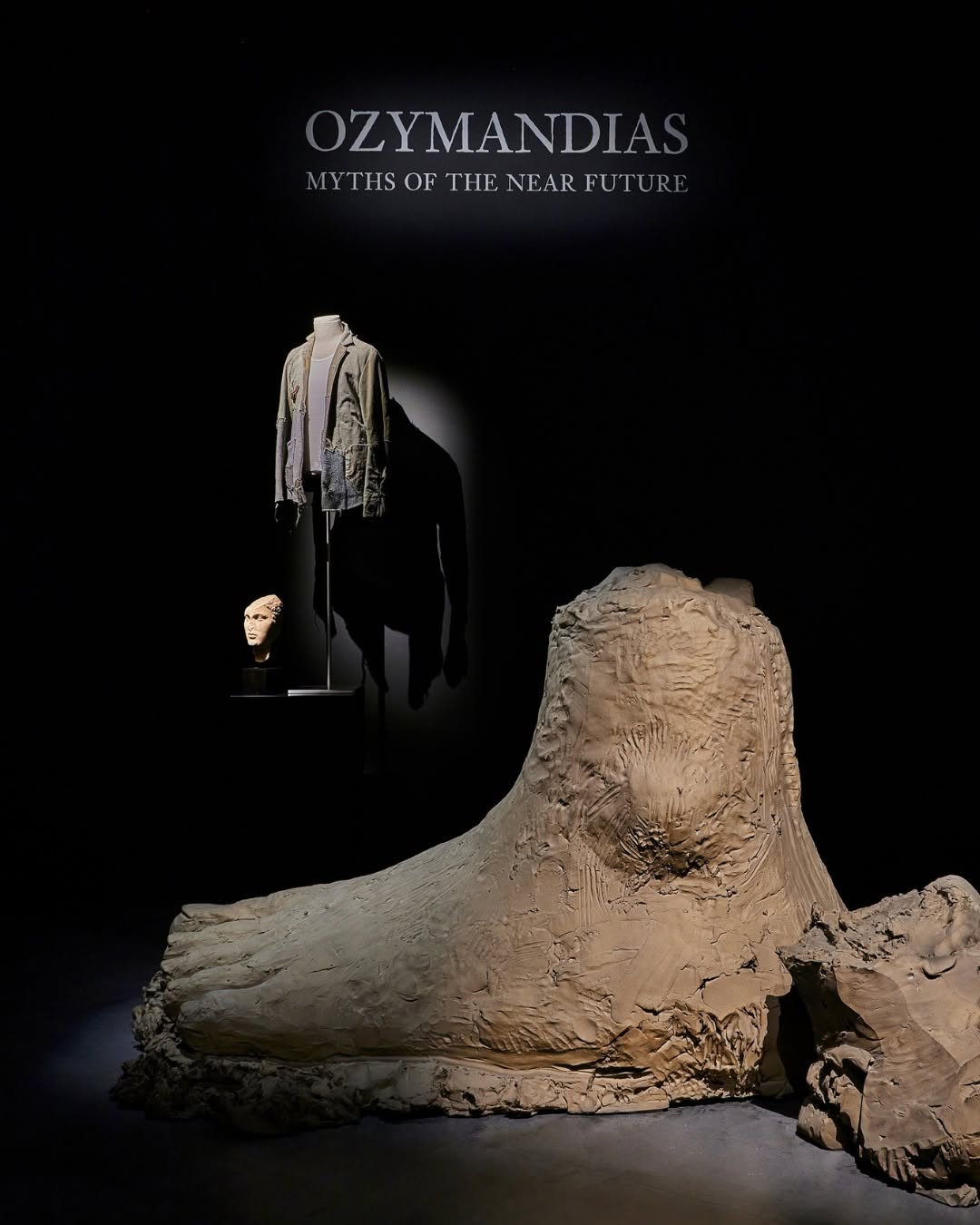
The distressed, salvaged garments of Greg Lauren — stitched, torn, and reassembled into a language of resilience — anchor this vision. Entering into dialogue with the spectral portraits of Eugène Carrière, Émile-Antoine Bourdelle and Georges Dorignac, alongside fragmentary heads from Ancient Greece, Rome and Egypt — the exhibition unfolds as a gathering of unlikely figures: part relic, part survivor, part apparition. These figures, in turn, emerge as unlikely models for Lauren's garments.
Throughout the exhibition, these figures exist in dialogue with the destabilised forms and material tensions of Andrew Luk, alongside the dismembered bodies and fractured anatomies of Urs Fischer and Jean-Luc Moulène. Their presence also resonates with literary visions of societies in collapse and worlds remade: from the scorched authoritarian futures of Ray Bradbury's Fahrenheit 451 and the brutal psychic landscape of Anthony Burgess' A Clockwork Orange, to the fragmented spiritual desolation of T.S. Eliot's The Waste Land. Together, these works evoke a civilisation suspended between ruin and reinvention.
Bringing a further sensory layer of experience, the rhythmic, industrial soundscape of Front 242 – the pioneering Belgian music group synonymous with Electronic Body Music – punctures the exhibition. Pulsating beats and haunting vocals amplify the dystopic narrative of collapse, endurance and transformation.
Moving through Ozymandias: Myths of the Near Future, the visitor becomes both witness and wanderer in a world that feels at once archaeological and post-apocalyptic, drawn from the ruins of the past and the myths of a speculative future.
製作/參與人員